What color should I paint my house?
There's no single right color for a house, but there is a reliable way to narrow it down. This guide walks through it step by step, with six color schemes on the same house so you can see what paint alone changes.
By the CurbMuse team · Last reviewed November 6, 2026
Short answer
Start with what you can't change, like the roof, brick or stone, and pick a body color with the same warm or cool undertone. Then choose a trim color that contrasts with it and one accent color for the front door or shutters. Before you buy, look at the colors on a photo of your own house and paint large samples on two sides of it.
Six color schemes on the same house
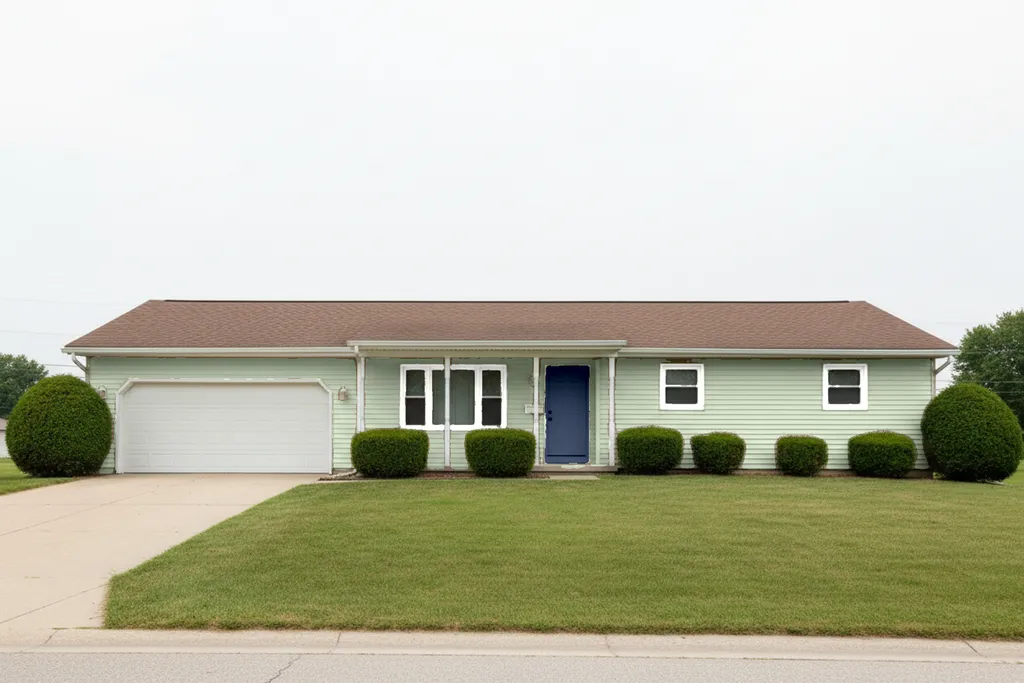
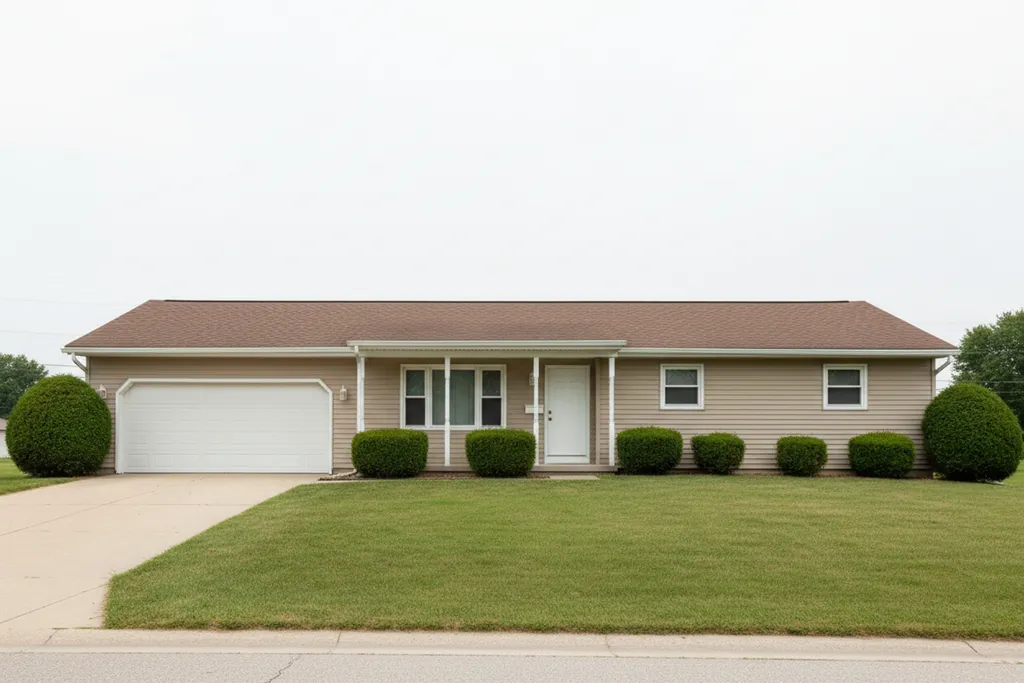
One ranch house, recolored six ways. The brown roof, the garage door and the yard stay the same in every photo.
As photographed
Tan siding, white trim and a white front door under a brown shingle roof.
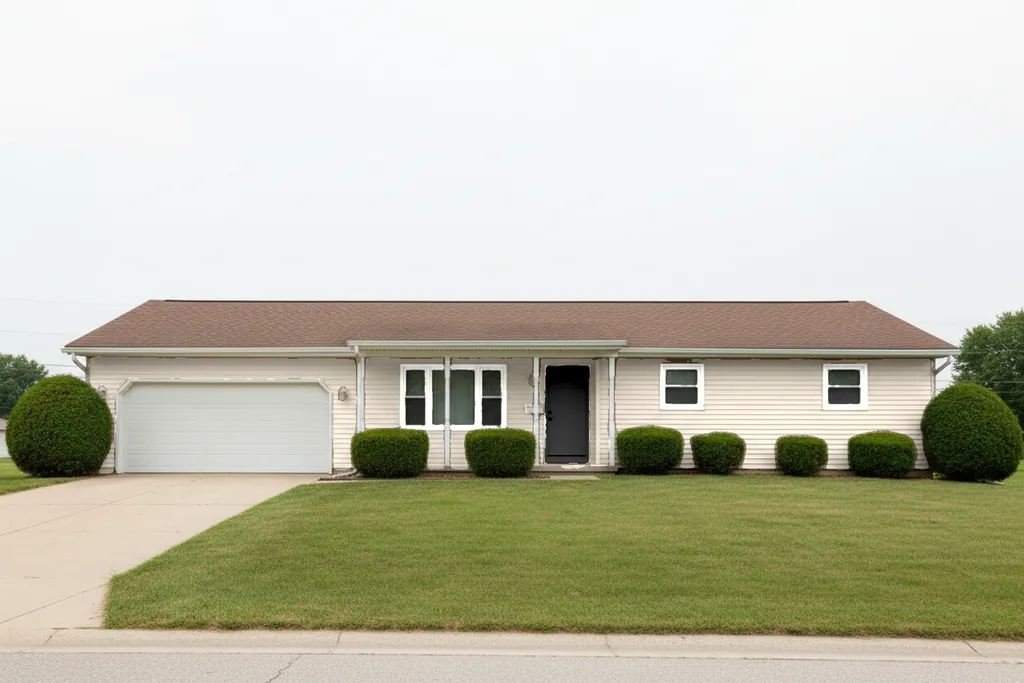
Greige, white and black
- Siding: Greige #C7BDAE
- Trim: Bright white #F6F5F0
- Door: Black #1F1F1F
A warm neutral between gray and beige. It sits easily next to a brown roof and almost any brick or stone, and a black door gives it a clear focal point.
Sage, white and navy
- Siding: Sage #A2AD96
- Trim: Bright white #F6F5F0
- Door: Navy #24324A
A soft gray-green that looks natural next to a lawn and shrubs. It works with brown, gray and black roofs; a navy door keeps it from feeling too sweet.
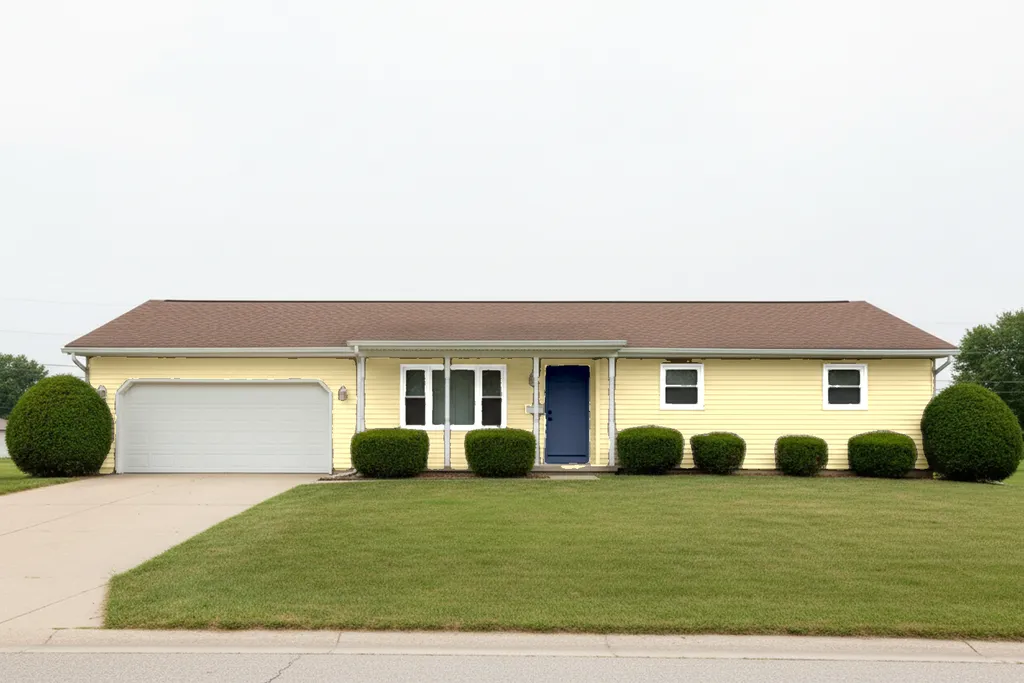
Butter yellow, white and navy
- Siding: Butter yellow #E6D49E
- Trim: Bright white #F6F5F0
- Door: Navy #24324A
Cheerful and traditional. Pale, slightly muted yellows look better on a whole house than bright ones, which can look almost neon in full sun.
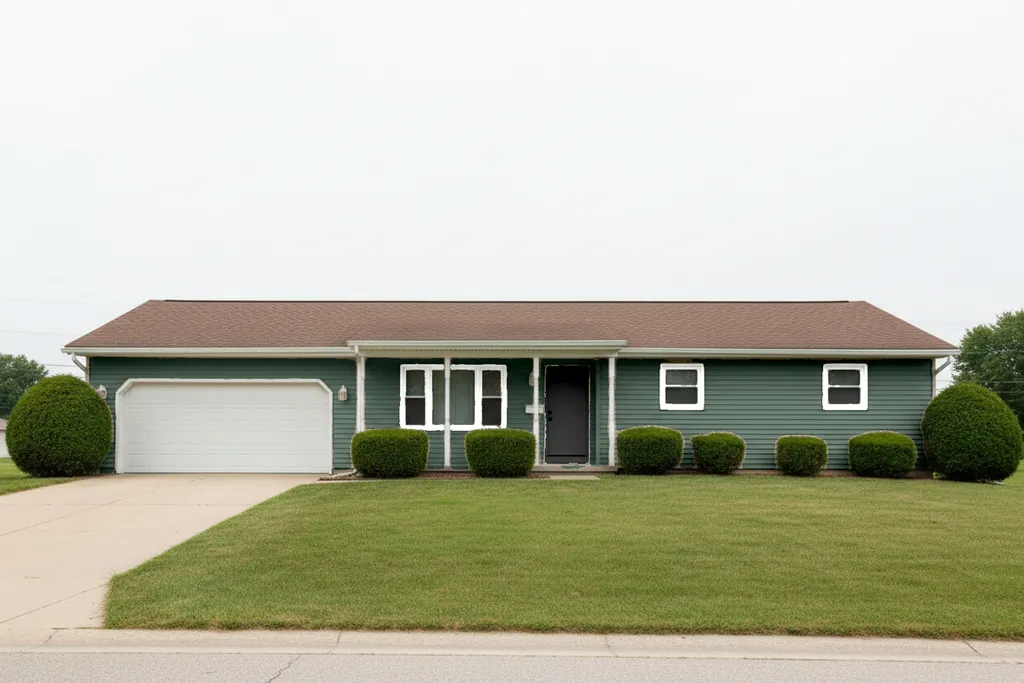
Deep green, white and black
- Siding: Deep green #3F4F44
- Trim: Bright white #F6F5F0
- Door: Black #1F1F1F
A darker color that still feels earthy, often chosen as a softer alternative to black. It pairs well with wood, stone and a brown roof.
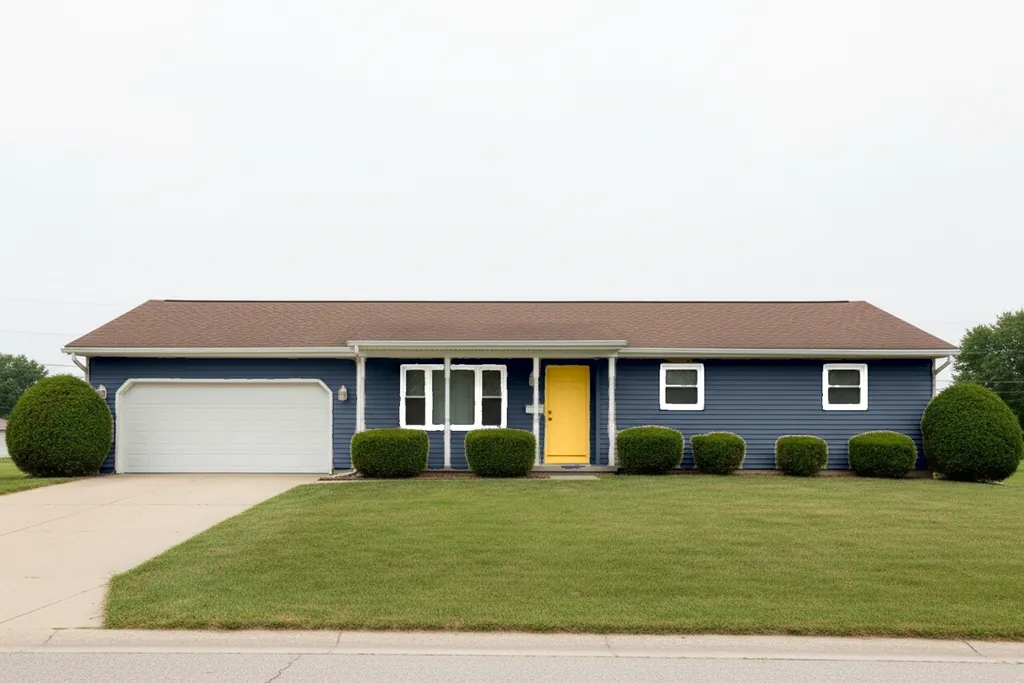
Navy, white and mustard
- Siding: Navy #2F3D4C
- Trim: Bright white #F6F5F0
- Door: Mustard yellow #D9A93A
Classic and bold. Crisp white trim keeps a dark body from looking heavy, and a warm door color stands out against the blue.
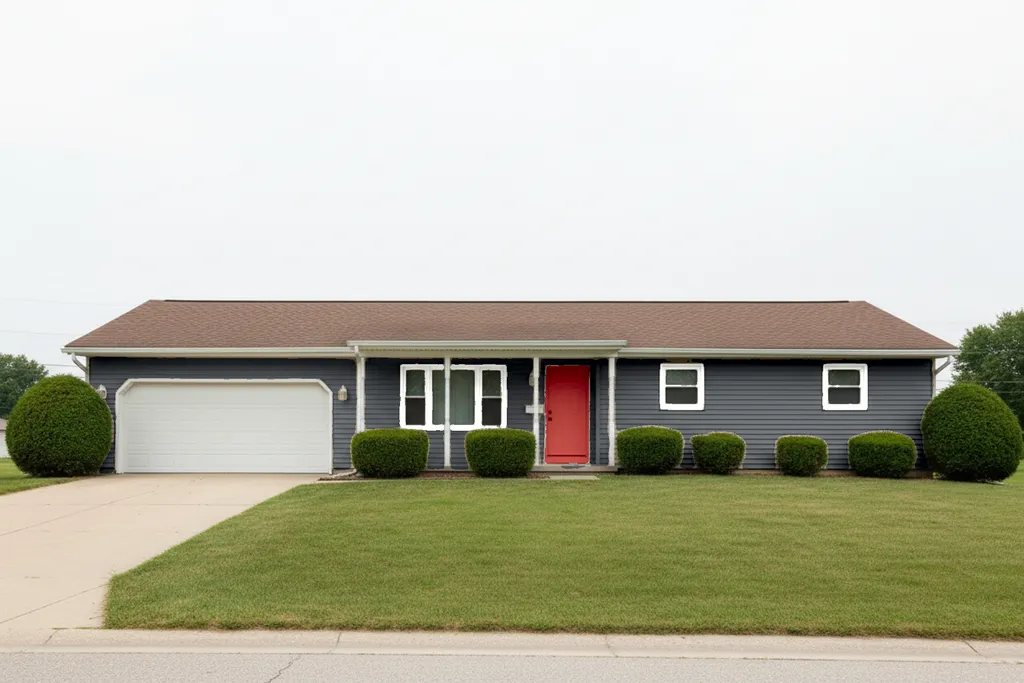
Charcoal, white and red
- Siding: Charcoal #404346
- Trim: Bright white #F6F5F0
- Door: Classic red #9B2A2A
Modern and strong. Like every dark color, charcoal absorbs more sunlight than a light one, so the walls get warmer and fading shows sooner in strong sun.
The house is an AI-generated sample photo, not a real home. The colors were applied with the same detection and recolor method as the CurbMuse paint visualizer, using the HEX values shown; nothing else in the photo was changed. Screens and daylight change how colors look, so test real samples before you buy paint.
How to choose exterior paint colors, step by step
1. List what's staying
Write down everything you won't repaint: the roof, brick or stone, windows, gutters, the driveway and walkway. These set the palette, and a new color has to work with all of them.
2. Find their undertone
Hold a sheet of white printer paper next to the roof and brick. Next to pure white, the hidden tone shows: warm (red, orange, yellow, brown) or cool (blue, green, gray). Pick paint colors that lean the same way. A cool gray body next to a warm brown roof is one of the most common reasons a house looks slightly off.
3. Pick the body color first
The siding is most of what you see, so decide it before anything else. Light colors make a house look larger and stay cooler in the sun; dark colors look bold and modern but absorb more heat. Pale versions of a color look stronger on a whole house than on a chip, so go a shade softer than you think.
4. Choose trim that contrasts
White or cream trim suits mid and dark bodies; black or dark bronze trim gives a light body a modern edge. Trim that's close to the body color tends to look washed out from the street.
5. Add one accent
Use the front door, and the shutters if you have them, for one accent color. One accent looks planned; three different ones look busy. A door is also the cheapest thing to repaint if you change your mind.
6. Check your street and the rules
A color that fits the neighborhood without copying the house next door usually looks best. If you have an HOA, check its approved colors before you fall for one; some historic districts have rules too.
7. Test it on your house
Try your shortlist on a photo of your house first, for example in the exterior paint visualizer. Then paint large samples, at least two feet square, on two sides of the house and look at them in the morning and the afternoon. Colors usually look lighter and brighter outside than on the chip.
Which house colors go with your roof
The roof is the biggest thing you're unlikely to change, so start there. These pairings are a starting point, not rules.
| Roof | Body colors that usually work | Go easy on |
|---|---|---|
| Black or charcoal | Body colors that usually work: Almost anything: white, light and mid grays, navy, sage, pale yellow | Go easy on: Very dark bodies, which can merge with the roof unless the trim is white |
| Gray | Body colors that usually work: White, blue-gray, sage, charcoal, navy | Go easy on: Warm tans and yellows, which can look dingy next to a cool gray |
| Brown | Body colors that usually work: Cream, beige, tan, greige, sage, deep green, warm white | Go easy on: Cool blue-grays, which can make the brown look muddy |
| Green | Body colors that usually work: White, cream, tan, light gray, greige, pale yellow | Go easy on: Green siding close to the roof color |
| Red or terracotta | Body colors that usually work: Cream, warm white, tan, sandy stucco tones | Go easy on: Cool grays and stark bright whites |
| Blue | Body colors that usually work: White, light gray, cream | Go easy on: Warm yellows and tans that fight the blue |
Brick and stone work the same way: they're fixed, so the paint has to suit them. See what colors go with a red brick house.
Mistakes to avoid
The most common reasons a freshly painted house doesn't look the way its owner expected.
Choosing from a small chip
A color covering a whole wall in full sun looks lighter and stronger than the same color on a two-inch chip indoors.
What to do: Always look at large samples outside.
A white that's too bright
The brightest whites can look stark and almost blue in direct sun.
What to do: Pick a slightly softer, warmer white for the outside of the house.
Too many colors
Each extra color makes the front look busier and the next repaint harder.
What to do: Body, trim and one accent is enough for most houses.
Ignoring the roof and brick
A color that looks great on a neighbor's house can clash with your roof.
What to do: Judge every color next to the parts of your house that stay.
More color guides
Frequently asked questions
Something else? Email hello@curbmuse.com. We usually reply within 2 business days.
How many colors should a house exterior have?
Usually three: a body color for the siding, a trim color for window and door trim, and one accent for the front door or shutters. Brick, stone and the roof count as colors too, so a house with a lot of brick may only need two paint colors.
Should the trim be lighter or darker than the siding?
Either works as long as there's clear contrast. Light trim on a mid or dark body is the traditional look; dark trim on a light body, such as black windows on white siding, looks more modern. Trim that's close to the siding color tends to look washed out.
Do dark exterior colors make a house hotter?
Dark colors absorb more sunlight than light ones, so dark siding gets warmer in direct sun and can fade sooner. Paint makers list a light reflectance value (LRV) for each color: the lower the number, the more light and heat it absorbs.
How can I see paint colors on my house before painting?
Upload a photo of your house to the exterior paint visualizer: AI finds the siding, trim, front door and garage door, and you can try any color on them in seconds. Then paint large samples of your two or three favorites on the house itself.
What exterior colors are the safest choice?
Neutrals with the same undertone as your roof and brick: warm whites, cream, greige and tan with warm roofs, and cooler whites and grays with gray or black roofs. They're hard to get wrong and easy to change later with a new front door color.

See these colors on your own house
Upload a photo: AI finds the siding, trim, front door and garage door, and you can try any color on them in seconds.
Open the paint visualizer